







Health Tourism
CyberKnife Treatment Turkey

Non-surgical cancer treatment with CyberKnife! Robotic radiosurgery in Turkey, prices, and success rates, including a comparison with Gamma Knife.
Non-Surgical Cancer Treatment with CyberKnife: The New Era of Robotic Surgery in Turkey
The groundbreaking CyberKnife technology in cancer treatment emerges as one of the most significant innovations in the healthcare sector in Turkey. This revolutionary system offers patients a non-surgical, painless, and minimally invasive treatment option, providing an alternative to traditional surgical methods.
In this new era of robotic surgery, many types of cancer can now be treated without the need for a scalpel, thanks to the CyberKnife system.
This technology, which is becoming increasingly widespread in Turkey, has become a beacon of hope, especially for patients with a high surgical risk. Used across a wide range of conditions from brain tumors to prostate cancer, and from lung tumors to liver metastases, CyberKnife targets tumors with precise radiation therapy while preserving healthy tissues.
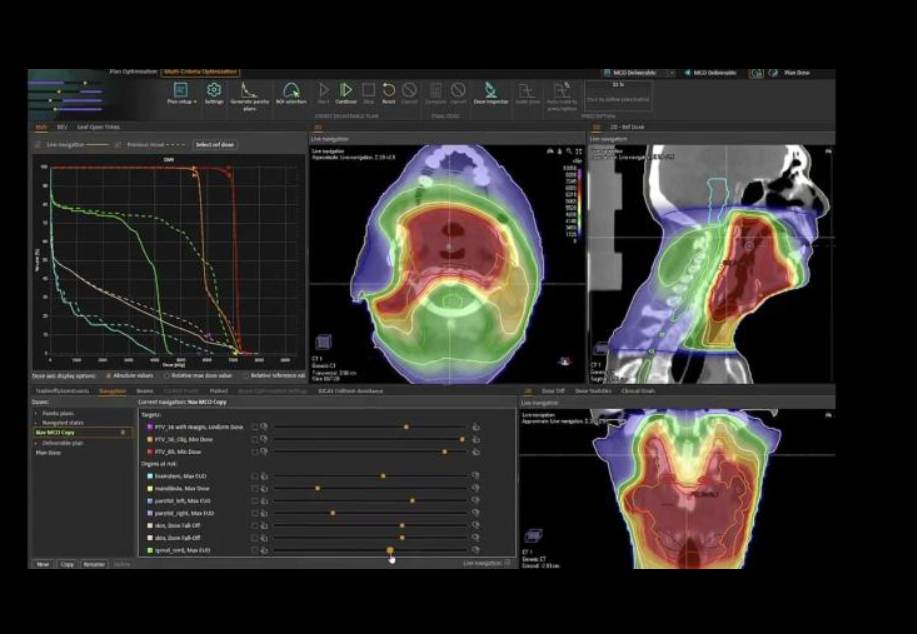
Non-Surgical Cancer Treatment with CyberKnife: A New Era of Robotic Surgery in Turkey
Types of Cancer Treated with CyberKnife and Success Stories
One of the biggest advantages of CyberKnife technology is its effectiveness in a wide variety of cancer types.
This robotic system is making waves in the world of oncology due to its ability to reach tumors in almost every part of the body. It offers an ideal solution, especially for tumors located in areas that are difficult or risky to operate on.
The main types of cancer treated with CyberKnife are as follows:
- Brain tumors: Acoustic neuroma, meningioma, glioma, and metastatic brain tumors
- Head and neck cancers: Nasopharyngeal, laryngeal, and oropharyngeal tumors
- Lung cancer: Early-stage lung tumors and lung metastases
- Prostate cancer: Localized prostate adenocarcinoma
- Liver tumors: Hepatocellular carcinoma and liver metastases
- Pancreatic cancer: Localized pancreatic tumors
- Spine tumors: Vertebral metastases and primary spine tumors
The majority of patients receiving treatment at CyberKnife centers in Turkey report a significant improvement in their quality of life after treatment.
. Especially for elderly patients and those with accompanying diseases, this technology offers a much safer option compared to traditional surgery.
CyberKnife and Gamma Knife: Which Technology is Superior?
Two important technologies stand out in the world of radiosurgery: CyberKnife and Gamma Knife. Although both systems operate on the principle of stereotactic radiosurgery, there are significant differences between them. Understanding these differences is crucial for patients to make the right treatment choice.
Gamma Knife technology is considered the gold standard, especially in the treatment of brain tumors. However, CyberKnife stands out due to its broader range of applications and its ability to treat tumors in moving organs. The biggest advantage of CyberKnife is that it does not require a frame to be attached to the patient’s head and can reach tumors anywhere in the body.
Gamma Knife treatment is usually completed in a single session, while CyberKnife treatment can vary between 1-5 sessions.
This situation allows CyberKnife to offer a more flexible treatment protocol. Additionally, thanks to CyberKnife’s real-time imaging system, it can compensate for the patient’s movements during treatment, increasing the precision of the therapy.
CyberKnife in Turkey: Costs, Accessibility, and Future Perspectives
The cost of CyberKnife treatment in Turkey varies depending on the type, size of the tumor, and the number of sessions. Generally, CyberKnife treatment presents itself as a more economical option compared to traditional surgery because it does not require hospital admission and the recovery time is much shorter.
The main CyberKnife centers in Turkey are located in Istanbul, Ankara, and Izmir. The success rates of patients receiving treatment at these centers are in line with global standards. Particularly in early-stage tumors, control rates ranging from 90-95% are achieved.
The inclusion of CyberKnife treatment by the Social Security Institution has significantly increased access to this technology. Private health insurances are also increasingly covering this treatment method in their policies. This situation is making CyberKnife treatment more common in Turkey.
In the future, the widespread adoption of CyberKnife technology in Turkey and the introduction of next-generation systems are expected. The integration of artificial intelligence and more advanced imaging systems is anticipated to enhance the effectiveness of CyberKnife treatment.
These developments have the potential to make Turkey a regional center for cancer treatment.
Which Types of Cancer Can Be Treated with CyberKnife? A Comprehensive Guide from Prostate to Brain Tumors
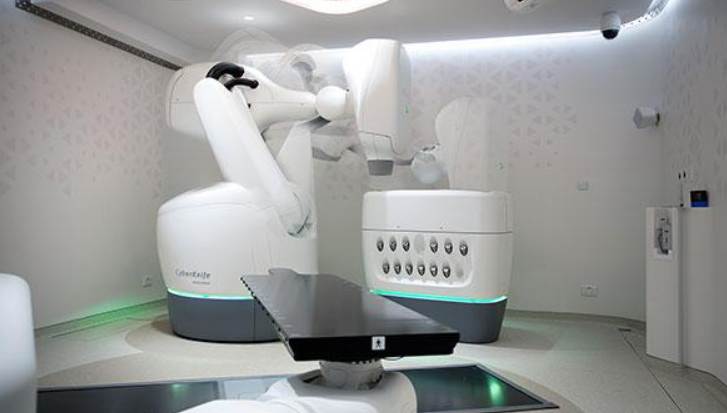
Which Types of Cancer Can Be Treated with CyberKnife
The CyberKnife system, one of the most sophisticated technologies of modern medicine, has the capacity to successfully treat dozens of types of cancer in different areas of the body. The power of this revolutionary technology lies in its ability to reach anatomical areas that seem almost inaccessible thanks to its robotic arm, which can move with microscopic precision, not limited to specific organ systems.
Unlike traditional radiation therapy methods, the adaptive technology of CyberKnife continues to target tumor cells even while the patient breathes in and out.
Unique Advantages of CyberKnife in Central Nervous System Tumors
Brain and spinal tumors are among the areas where CyberKnife technology is most successful.
The fundamental reason behind the preference for this technology in cranial and spinal lesions is its ability to eliminate tumor tissue without damaging critical nerve structures. In patients with acoustic neuroma, the application of CyberKnife minimizes the risk of hearing loss, while also achieving effective results in functional disorders such as trigeminal neuralgia.
Specifically regarding brain metastases, the multiple lesion treatment capability offered by CyberKnife provides patients with the opportunity to treat multiple tumors in the same session.
Pituitary adenomas, craniopharyngiomas, and meningiomas have success rates that carry a lower risk of complications compared to traditional surgical interventions, achieving tumor control between 85-95%. In spinal metastases, CyberKnife creates dramatic improvements in pain palliation while preserving the patient’s mobility.
Innovative Approaches in Thoracic and Abdominal Cancers
In lung cancer treatment, CyberKnife’s respiratory motion tracking system increases the precision of treatment by compensating for the natural movement of the lungs during inhalation and exhalation.
In early-stage non-small cell lung cancer, especially in patients who are not suitable for surgical intervention, CyberKnife treatment is successfully applied as a non-surgical alternative. Similarly, in lung metastases, the ability to treat multiple lesions simultaneously provides a significant advantage.
The fiducial marker system of CyberKnife tracks changes in the anatomical position of the organ in real time in liver tumors and metastases. In patients with hepatocellular carcinoma, especially those waiting for transplantation, CyberKnife, used as a bridging therapy, stops tumor progression and increases the chances of transplantation.
In pancreatic adenocarcinoma, while the protection of surrounding organs is critically important, the submillimeter precision of CyberKnife allows for radiosensitive structures such as the duodenum and small intestine to be kept at a safe distance.
Precision Treatment Protocols for the Urogenital System and Other Solid Tumors
In the treatment of prostate cancer, CyberKnife’s hypofractionated treatment protocols offer patients a treatment option that can be completed in as little as 5 sessions. Compared to the 6-8 week treatment duration of traditional radiotherapy, prostate cancer treatment with CyberKnife can be completed in just 1-2 weeks.
The real-time adaptation capability of CyberKnife significantly reduces the long-term risk of side effects in terms of protecting nearby organs such as the rectum and bladder.
In head and neck cancers, the multi-angle beam geometry of CyberKnife can provide optimal dose distribution even in complex anatomical structures. In nasopharyngeal carcinoma, while protecting critical structures such as the optic nerves and brainstem, local control rates can exceed 90%. In laryngeal and oropharyngeal tumors, the organ-preserving treatment approach optimizes functional outcomes.
The ability of CyberKnife to deliver large fraction doses in bone and soft tissue sarcomas allows for effective results even in radioresistant tumor types. In retroperitoneal sarcomas, while protecting critical organs such as the kidneys and intestines, the application of high biological effective dose becomes possible.
In oligometastatic patients, the stereotactic ablation capability of CyberKnife contributes to achieving long-term remission by enhancing the effectiveness of systemic treatments.
CyberKnife vs Gamma Knife: Which Radiosurgery Method is More Suitable for You?
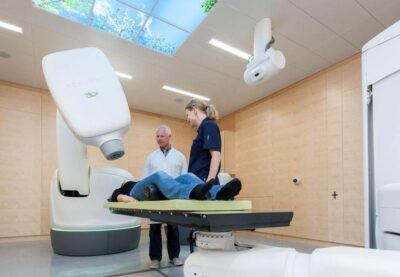
CyberKnife vs Gamma Knife: Which Radiosurgery Method is More Suitable for You?
Choosing between two revolutionary technologies in radiosurgery is a critical decision that could determine the future of your cancer treatment. Understanding the differences between the CyberKnife and Gamma Knife systems is not just a matter of technical specifications; it is directly related to the preservation of your quality of life and how your treatment process will unfold. While both technologies operate on the principles of stereotactic radiosurgery, they differ significantly in terms of the experience they offer and their applicability.
The choice between these two superheroes of modern medicine depends on many factors, from the location of your tumor to your lifestyle, treatment preferences, and current health status. Determining which technology is more suitable for you is possible through the accurate analysis of these complex variables.
Technological Infrastructure and Application Differences: Two Different Philosophies
The Gamma Knife system demonstrates a specialized approach focused on brain tumors using 201 cobalt-60 sources, while CyberKnife technology employs linear accelerators.
It offers a versatile platform that can reach every point of the body with a flexible robotic arm system based on accelerators.
This fundamental difference profoundly affects the application areas of both technologies and the patient experience.
In Gamma Knife treatment, the stereotactic frame system placed on the patient’s head ensures millimetric precision while also requiring the patient to remain completely still during the treatment. Although this situation brings the advantage of a single-session treatment protocol, it can be uncomfortable for some patients.
In the CyberKnife system, the frameless treatment approach provides a significant advantage in terms of patient comfort, while real-time imaging guidance allows even minimal movements during treatment to be compensated for.
Although both systems have accuracy rates at the submillimeter level, the adaptive technology of CyberKnife enables it to adjust to respiratory movements and changes in organ positions, creating unique advantages, especially for thoracic and abdominal tumors.
The static treatment geometry of the Gamma Knife ensures maximum dose density for brain tumors while guaranteeing minimal radiation exposure for surrounding tissues.
Patient Experience and Treatment Process: Comparison of Comfort and Practicality
The differences between the two technologies in terms of treatment experience are factors that directly affect patients’ reasons for preference. Gamma Knife treatment offers a single-day intensive experience, allowing patients to typically arrive at the center early in the morning, complete the frame placement, planning imaging, and treatment processes all on the same day, and return home in the evening.
The CyberKnife treatment protocol generally adopts a fractional approach that varies between 1-5 sessions, with each session lasting an average of 30-90 minutes. This approach offers patients a more flexible scheduling option while ensuring that daily life activities are minimally affected. Especially for working patients, the CyberKnife’s outpatient treatment model provides practical advantages in terms of not requiring a long-term break from work.
The comfort factor during treatment is also an important criterion that cannot be overlooked.
The need for local anesthesia during frame application in Gama Knife and the requirement to remain in a fixed position throughout the treatment can create stress for some patients, while CyberKnife’s frameless approach promises a more comfortable treatment experience. For elderly patients and those with pain issues, this difference can play a decisive role in treatment selection.
Cost Analysis and Long-Term Evaluations: Economic Perspective
Economic factors are among the critical elements to consider in treatment selection.
The cost of Gama Knife treatment in Turkey is generally more predictable due to the single session protocol, while the cost of CyberKnife treatment can vary depending on the number of sessions. However, this does not always mean that CyberKnife is more expensive.
When conducting a long-term cost analysis, it is observed that CyberKnife provides indirect savings due to the absence of hospitalization costs, minimized companion expenses, and the ability to continue daily living activities, thanks to its outpatient treatment approach.
In Gama Knife treatment, the time savings brought by the single-session protocol can reduce transportation and accommodation costs, especially for patients coming from outside the city.
The fact that the Social Security Institution includes both treatment methods in the reimbursement scope allows patients to choose the most suitable treatment option without economic concerns. The increasing inclusion of these technologies in policy coverage by private insurance companies is creating positive developments in terms of accessibility.
When considering the long-term effects on treatment efficacy and quality of life, both technologies provide superiority in cost-effectiveness compared to traditional surgical methods.
CyberKnife Treatment Costs and Success Rates in Turkey: Financial Planning Guide
Cancer treatment is revolutionized by CyberKnife technology, which is becoming increasingly common in Turkey, and one of the main concerns of patients is the treatment costs and success rates.
The miraculous technology of modern medicine is fundamentally changing patients’ financial planning by offering both cost-effective and high success rates compared to traditional surgical methods. The experiences of thousands of patients treated at CyberKnife centers in Turkey reveal how advantageous this technology is not only medically but also economically. Especially for patients planning long-term treatment, the comprehensive cost analysis and transparent pricing policies offered by CyberKnife are crucial for making informed decisions.
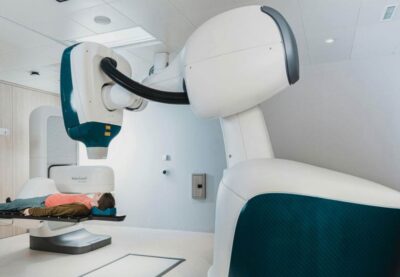
CyberKnife Treatment Costs in Turkey
In Turkey, CyberKnife treatment costs are shaped by the complex interaction of multiple factors, and understanding a transparent pricing system is vital for patients to make accurate financial plans.
The main components of treatment costs include medical parameters such as the anatomical location of the tumor, its size, degree of complexity, and the number of sessions required, while technological infrastructure costs and specialist fees also emerge as effective factors in price determination.
The reimbursement policies of the Social Security Institution significantly reduce the amounts patients have to pay out of pocket. For patients receiving treatment under SGK, personal co-payments typically remain at around 10-20% of the total cost, while this rate can be even lower for patients with private insurance policies.
Policies that cover CyberKnife treatment, especially within the scope of critical illness insurances, minimize the financial burden on patients.
The success rates of CyberKnife centers in Turkey present quite impressive results when compared to international standards, providing objective data that patients can trust in their treatment choices. The expertise of experienced radiation oncology teams in our country and the integration of state-of-the-art CyberKnife systems ensure that worldwide accepted success rates are achieved.
In the treatment of brain metastases, CyberKnife centers in Turkey achieve 92-96% local control rates, while hearing preservation rates in acoustic neuroma cases are above 85%. In early-stage lung cancer, 2-year local control rates occur in the range of 94-98%, while in oligometastatic patients, progression-free survival times show an increase of 40-60% compared to traditional treatments. In prostate cancer treatment, biochemical control rates are at 91-95% during 5-year follow-ups, while severe side effect rates remain below 2%.
In the Turkish patient population, quality of life scores show significant improvement after CyberKnife treatment. Notably, a dramatic reduction in pain scores has been recorded in 78% of patients undergoing treatment for spinal metastases, while documentation shows a 65% improvement in functional capacity tests. The ability to preserve swallowing functions in head and neck cancers with an organ-preserving treatment approach provides critical advantages for patients in terms of long-term quality of life.
CyberKnife treatment requires comprehensive financial planning, which is strategically important for minimizing the economic stress patients may experience during the treatment process and achieving optimal treatment outcomes. This revolutionary approach of modern cancer surgery offers multidimensional cost advantages compared to traditional surgical interventions, and it is possible to maximize these advantages with the right financial strategies.
The first step in the pre-treatment financial planning process is to conduct a comprehensive insurance analysis.
In addition to existing SGK rights, a detailed examination of whether private health insurance policies cover CyberKnife treatment is critically important. Critical illness insurances provide significant ease in covering treatment costs by making a lump sum payment after a cancer diagnosis, while some policies may specifically exclude CyberKnife treatment.
The payment facilities and installment options offered by hospitals create important opportunities for distributing the financial burden.
Especially the 6-12 month installment plans offered by private hospitals allow patients to create payment programs that fit their monthly budgets. Additionally, early payment discounts and package treatment programs can provide savings of 10-15%.
The calculation of indirect costs is also an indispensable part of the financial planning process. The outpatient nature of CyberKnife treatment eliminates hospital admission costs while minimizing factors such as companion expenses, transportation costs, and loss of labor.
Compared to traditional surgery, the reduction of the recovery time from 4-6 weeks to 2-3 days provides significant advantages in terms of indirect cost savings. This situation creates double economic benefits, especially for patients with an active working life, as it minimizes income loss alongside treatment costs.


